

Apache Down — The Tipping Point that Could Crumble the Illusion of a Ceasefire
What does it mean when a drone goes where it’s told — and it’s told to find an Apache?


DISCLAIMER: This brief was written with events and information up to June 9, 2026; any events that have occurred since are not addressed. It aims to explore the dynamics driving events underneath diplomatic cover that often saturates MSM headlines.
On the night of June 8, the Strait of Hormuz stopped being a negotiating backdrop and started being a battlefield. An Iranian missile salvo hit Israel. The Houthis sealed the Red Sea. And an American Apache went down in the dark near the coast of Oman. These were not three separate decisions. They were one message, delivered in three languages simultaneously.
TFP CONFIDENCE TIERING: The Firebrand Project labels the confidence behind every significant finding in this piece. CONFIRMED means multiple independent sources have verified it. HIGH-CONFIDENCE means the sourcing is strong with minor gaps. DEVELOPING means the indicators are credible but not yet fully corroborated. CLAIMED means a single party — often one with skin in the game — has asserted it without independent verification.

01 — THREE EVENTS IN FOURTEEN HOURS TELL YOU EVERYTHING IRAN INTENDS
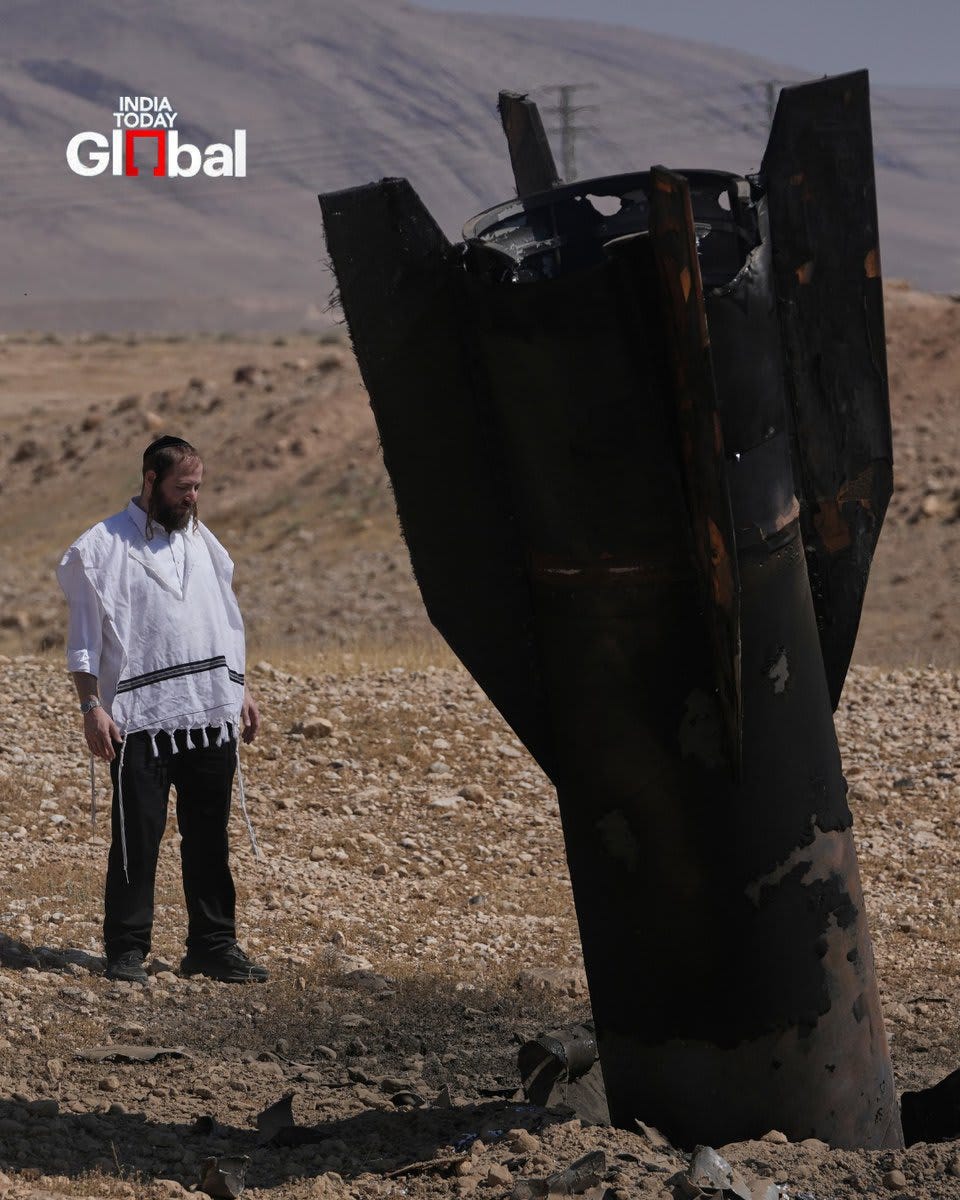
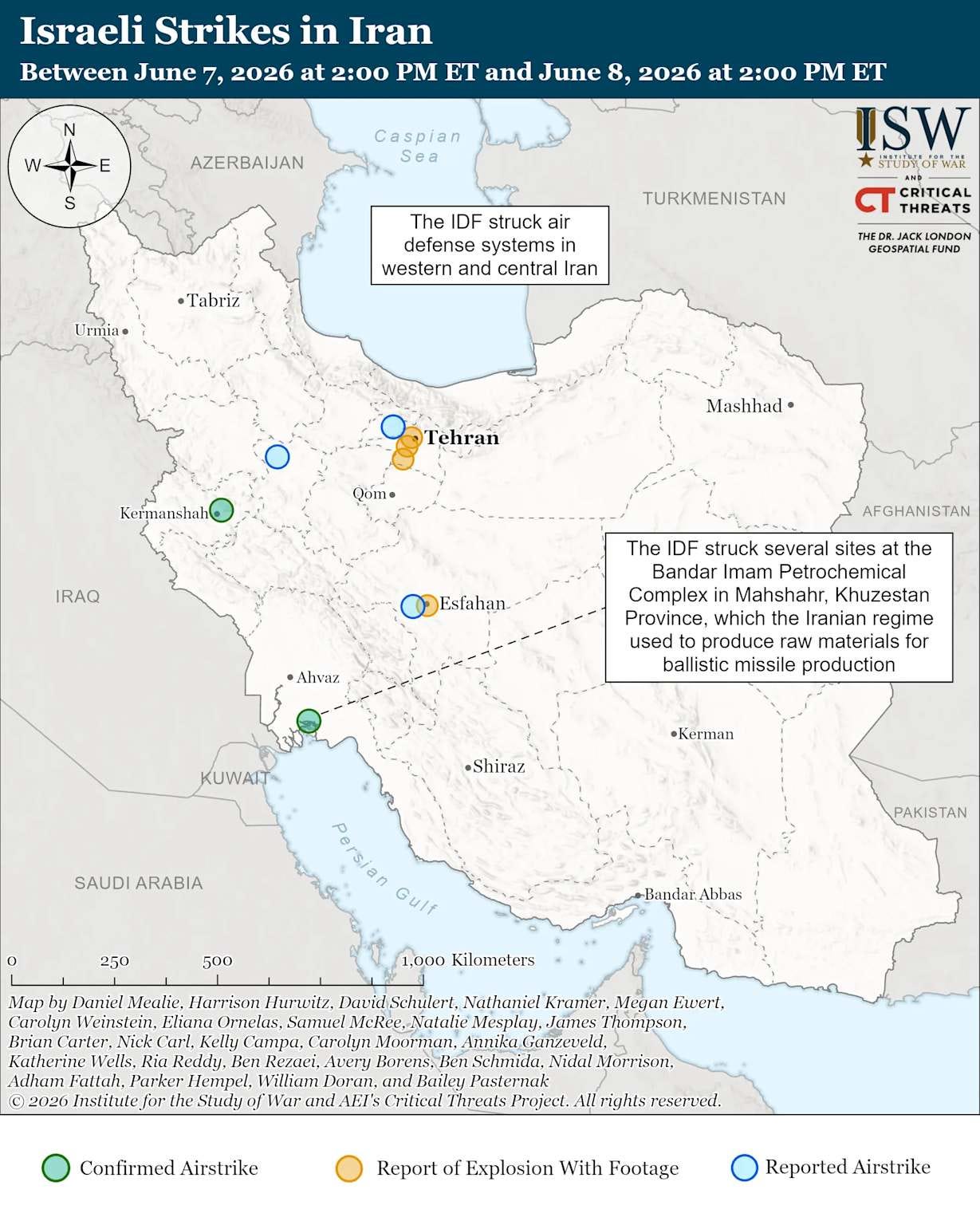
The fourteen hours before the Apache went down were the most dangerous since the ceasefire declaration in early April. Iran launched approximately 30 ballistic missiles at Israel on June 8 in three waves. Israel struck back — petrochemical facilities, air defense infrastructure — within four hours. President Trump described the exchange as the most dangerous fourteen hours of his presidency and intervened directly to halt it. That same night, the Houthis formally declared a complete and total ban on Israeli maritime navigation in the Red Sea, activating what analysts had assessed as a theoretical dual-chokepoint scenario: Bab el-Mandeb (the strait connecting the Red Sea to the Gulf of Aden) and the Strait of Hormuz simultaneously threatening roughly one-third of global seaborne oil and gas, per Euronews. At 7:33 PM ET, a U.S. Army AH-64E Apache attack helicopter went down near the Omani coast. Both crew entered the water. CENTCOM confirmed their rescue and listed the cause as under investigation.
The Apache did not fall into an otherwise quiet night. In the four days preceding June 8, CENTCOM had already shot down four Iranian drones on June 4 and two more on June 6 near the Strait of Hormuz. Each engagement was logged and released by CENTCOM without attribution of escalatory intent — described as routine enforcement. What June 8 revealed is that those engagements were not routine. They were the acceleration phase of an IRGC (Iran’s Revolutionary Guard Corps, the elite paramilitary force that controls Iran’s proxy networks and unconventional warfare operations) enforcement surge that had been building since at least June 5, calibrated in intensity each day, and culminating in the same fourteen-hour window as the missile exchange with Israel. Four kinetic IRGC actions in four days, each one incrementally closer to a direct confrontation with US forces. The Apache is where that trajectory landed.
HIGH-CONFIDENCE — per ISW/CTP Iran campaign tracking — the IRGC enforcement surge reflects a deliberate doctrinal posture, not reactive opportunism. Araghchi issued a statement on June 9: forces from abroad near Iran’s borders are “perpetually at risk.” The Houthi dual-chokepoint declaration on the same night was not coincidental timing. The Houthis operate as part of the Axis of Resistance (Iran’s network of allied armed groups across the Middle East, including Hezbollah and the Houthis themselves) coordinated pressure architecture. When Iran escalates at Hormuz, the Houthis have consistently activated at Bab el-Mandeb within the same operational window. June 8 followed that pattern exactly. Two pilots floated in the Arabian Sea while the most consequential strategic chokepoints in the world were being simultaneously closed around them.
Questions
Iran launched missiles at Israel, the Houthis sealed the Red Sea, and an Apache went down — all in the same fourteen hours. Is this level of coordination actually possible across three different actors, or is the timing coincidental?
The IRGC had already engaged US assets six times in four days before the Apache went down. Why didn’t any of those prior engagements generate the same level of response from Washington?
The Houthis declared a “complete and total ban” on Israeli maritime navigation on the same night as the Apache incident. What does activating both chokepoints simultaneously signal about where Iran assesses its leverage right now?
Iran’s foreign minister didn’t claim the Apache and didn’t deny it — he just said foreign forces near Iran’s borders are “perpetually at risk.” What does that silence tell you about Iran’s strategic posture heading into nuclear talks?
The term “ceasefire” is doing a lot of diplomatic work that the facts don’t support. Ceasefires — particularly in this region and in conflicts like M23 in the DRC or the Thailand-Cambodia border disputes — have historically functioned as instruments to reduce international political heat, not genuine cessations of hostilities. What we have had since early April is a low-intensity conflict operating under a ceasefire label. The Apache incident is a reminder that the label was always the illusion.
On the coordination question: my gut says no, the timing is not coincidental. Shaheds are pre-programmed to target coordinates before launch — they fly autonomously to a designated point. Whether the variant at Hormuz was standard or carried a modified terminal guidance package, arriving at an Apache’s patrol altitude and corridor requires deliberate targeting input. There is no architecture — autonomous or operator-guided — under which that is incidental. The United States has a vested interest in calling this a collision rather than a shootdown. A confirmed shootdown means Iran has developed an effective anti-helicopter deterrent using Shahed-class drones — or potentially a MANPAD system (a shoulder-fired anti-aircraft missile) — which is a significant capability development. Confirming it publicly hands Iran a hard power victory Washington will resist for as long as possible.
The prior engagements didn’t generate the same response because no American was put directly in danger. The Apache is different. Two US service members went into the water. This is a high-visibility event involving one of the most iconic pieces of American military deterrence in the theater — a direct chip off American hard power credibility, something this conflict has been quietly calling into question at scale. What can be downplayed, will be. This cannot.
The Houthi dual-chokepoint declaration is part of a broader Iranian pressure architecture designed to isolate Israel economically while testing how far the United States can be pushed without triggering direct conflict. Passing non-Israeli shipping while banning Israeli navigation sends a signal to every third-party state: comply, or you’re next. The implicit message — we could close it entirely, but we’re only closing it to Israel right now — is both economic pressure on Israel and a test of international resolve simultaneously.
Araghchi’s statement follows a familiar pattern: calibrated escalation in media and political intensity, designed to probe the adversary’s response threshold without forcing a kinetic reply. The Apache, the missile salvo, and the Red Sea closure together read as a deliberate barb — a probe to see if Iran can draw the United States and Israel back into a larger-scale engagement. That has been the Iranian strategic intent throughout. I expect a series of US and Israeli airstrikes on Iranian facilities in response. The question I’m watching is which bases get hit — because that will tell you whether Iran has achieved its next phase trigger, or whether Washington is still trying to keep the lid on.
02 — THE WORD “COLLISION” IS DOING MORE WORK THAN THE EVIDENCE CAN SUPPORT
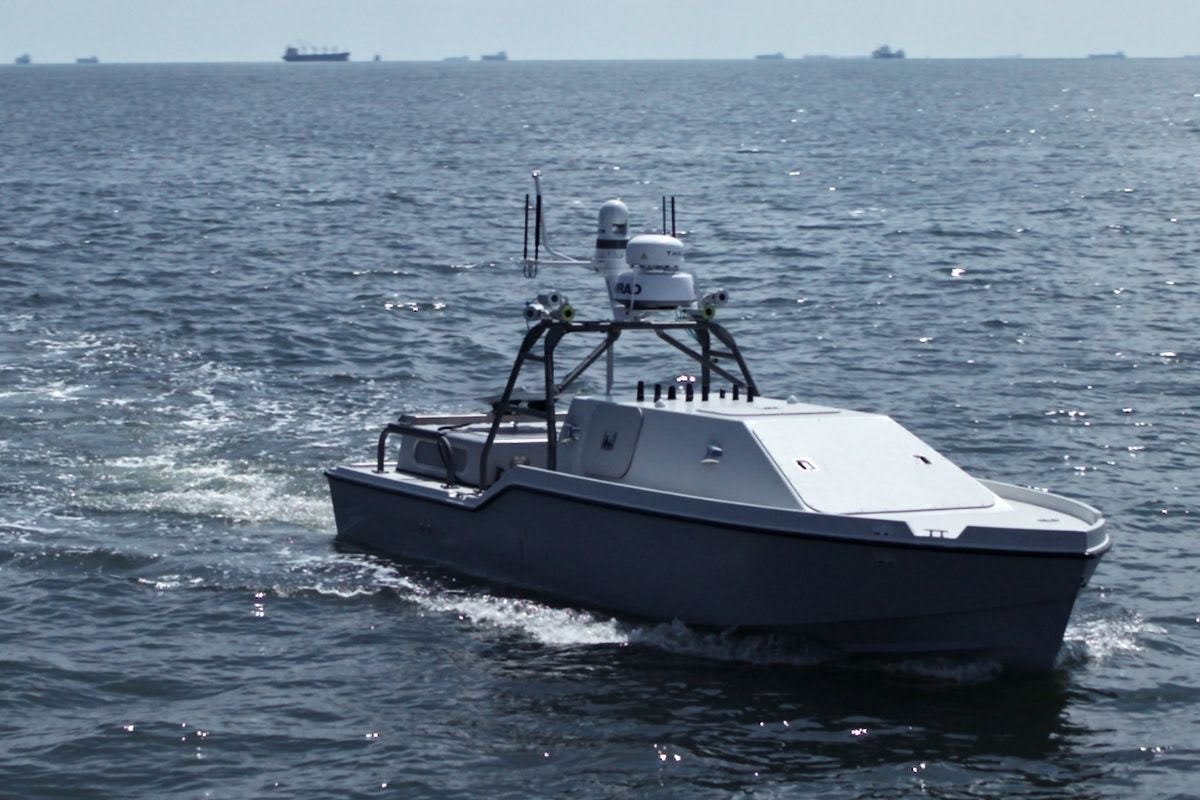
DEVELOPING — The official US framing on the Apache is contested from within the same government. CENTCOM’s official statement listed the cause as under investigation and attributed nothing to Iran. Trump’s Truth Social post attributed it directly. Two US officials confirmed to CBS News and CNN that an Iranian Shahed drone struck the aircraft. A senior US official told Israeli Channel 12, cited by @Osinttechnical, that the drone “collided with” the Apache. These are not the same claim. The Firebrand Project cannot independently verify which account is accurate — and neither, yet, can CENTCOM publicly. A collision implies proximity, accident, the fog of a contested airspace. A shootdown implies something else entirely: that Iran has developed and successfully deployed an anti-helicopter capability using Shahed-class loitering munitions — or a MANPAD (a shoulder-fired anti-aircraft missile system) — against one of the most advanced attack helicopter variants in the US fleet, in its own operational patrol corridor, at night.
The Shahed-136 in its standard configuration is not a remotely piloted aircraft in the conventional sense. It is pre-programmed to a target coordinate before launch and flies that route autonomously, using inertial navigation and GPS — and in upgraded variants, limited terminal-phase remote adjustment capability per CSIS analysis. What this means for the “collision” framing is material: a Shahed arriving at the altitude and patrol corridor of an AH-64E on a known patrol route did not wander there. Someone programmed those coordinates. The autonomous architecture, far from making accidental collision more plausible, makes it less so — because the drone goes where it is told to go before it ever leaves the ground. The distinction between “collided with” and “shot down” may ultimately be a legal and doctrinal one rather than a physical one. In either case, the targeting was deliberate.
What the mechanism question actually resolves is the scale of the required US response. An intentional shootdown is an act of war against a US military asset in international airspace — it demands a kinetic reply that is visible, attributable, and proportionate to the loss of a multimillion-dollar aircraft and the near-death of two service members. A collision is manageable: grievable, protestable, escalatory in rhetoric without requiring a matching escalation in force. The gap between those two outcomes is the space Iran is currently occupying. Iran has not claimed the Apache. It has not denied it. Araghchi said foreign forces near Iran’s borders are perpetually at risk — a statement that functions simultaneously as a threat, a non-denial, and a posture of plausible deniability. That is not accident. That is doctrine.
Questions
CENTCOM hasn’t officially attributed the cause, Trump has, and two anonymous officials told separate outlets it was a Shahed strike — while a different senior official called it a collision. Why are we getting three different framings from the same government simultaneously?
If the Shahed-136 is pre-programmed to coordinates before launch, what does it mean that one arrived at an Apache’s patrol altitude and corridor — and does that change how you read the “collision” framing?
Iran hasn’t claimed the Apache and hasn’t denied it. What does that specific posture — neither claiming nor denying — tell you about how Tehran is managing the escalation ladder right now?
The mechanism question — collision versus shootdown — seems technical, but you’ve suggested it determines the scale of the US response. Walk us through that logic.
The framing discrepancy reflects poor internal cohesion more than intentional misdirection. This administration has a documented pattern of the president directly contradicting his own Secretary of State — most visibly on Iran: in March 2026, Rubio told reporters that Israel’s plans to strike Iran prompted US involvement, and Trump publicly contradicted him the following day, forcing Rubio to walk back his statement. Trump ran ahead of his own chain of command on the Apache attribution the same way. CENTCOM defaults to caution and investigation; Trump defaults to attribution and pressure. That gap is not a communications strategy. It is disorganization.
On the Shahed and the airspace: Iran is very intentional about how it escalates. This is not dissimilar to Russia’s approach with NATO — incremental, calibrated, always probing the threshold — just executed more aggressively. That drone was sent into airspace Iran almost certainly knew US Apaches were patrolling. No matter the precise mechanism, the intent was to create tension in a space Iran knew was occupied.
Iran doesn’t need to claim or deny anything. The Apache went down. Decision-makers on both sides know exactly how unlikely a random mid-air collision between a Shahed and an AH-64E is. The message was received without a press release.
The AH-64E carries a sensor and awareness suite specifically designed to detect threats at range — including small drones. The crew almost certainly saw the Shahed before it reached them. The more plausible scenario is not that they were unaware: it’s that they assessed it as one of the many drones they had been observing contesting the airspace in recent weeks, held fire, and this one behaved differently. It didn’t contest the airspace. It prosecuted a target. That gap between threat assessment and engagement decision is what Iran may have just successfully exploited.
Two possibilities sit at the end of that logic. Either this is being publicly labeled a collision to minimize the response and buy time for a decision — the most politically useful framing available to an administration that does not want to be pulled back into this conflict. Or Iran has successfully adapted the Shahed into a low-altitude rotary-wing intercept solution and just demonstrated it in combat. Both possibilities are troubling. The second is the one the US defense establishment will spend the next several weeks quietly trying to determine. “Collision” is the word you use when you need to govern the public response while that determination is made.
03 — IRAN IS NEGOTIATING AND ESCALATING WITH THE SAME HAND — THAT IS THE STRATEGY
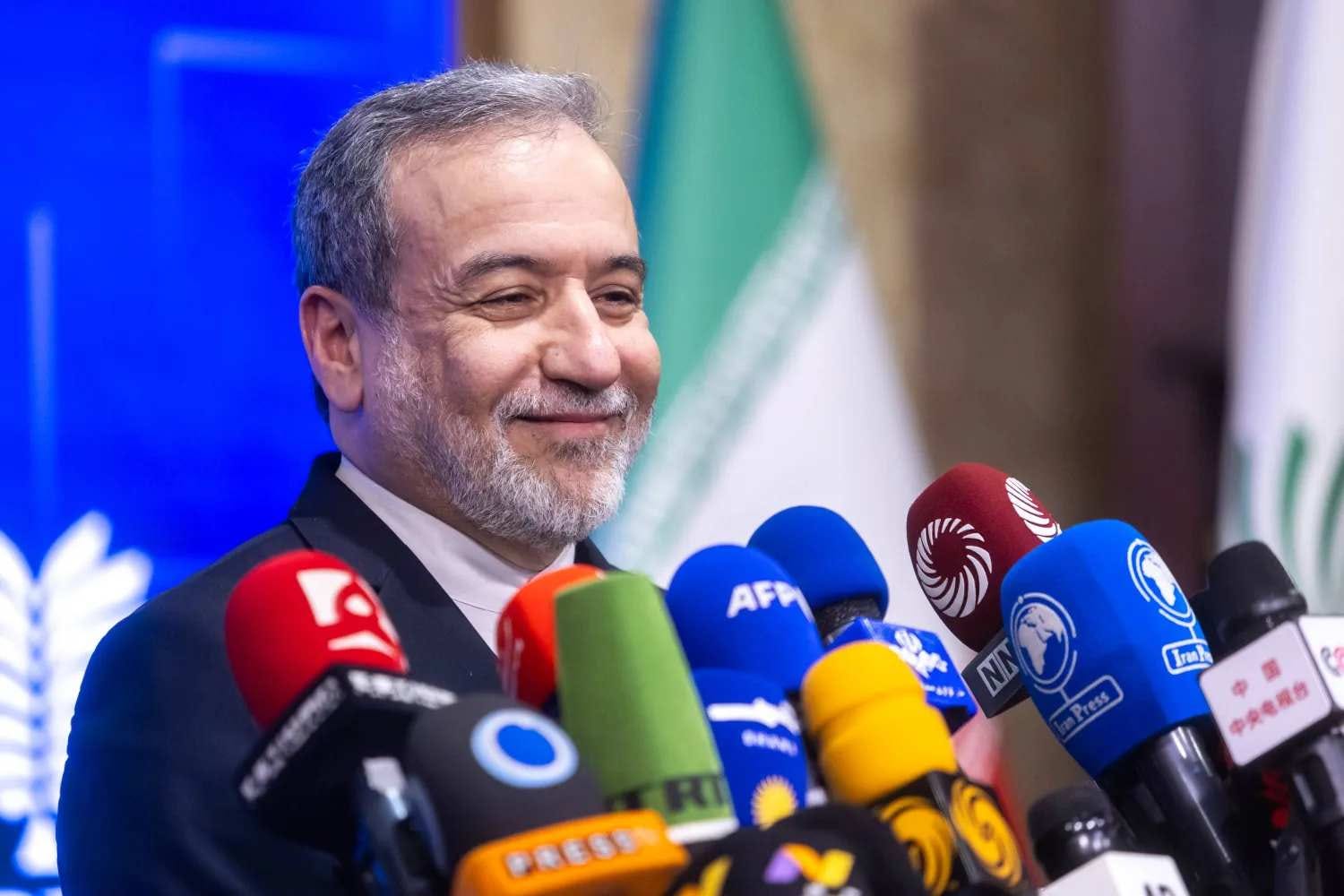
On June 6 and 7, Iranian Foreign Minister Araghchi was in Rome for the fifth round of Oman-mediated nuclear talks with US envoy Steve Witkoff. Both sides described the session as constructive, per Reuters. The following night, the IRGC was contesting the Strait of Hormuz with drones, Iran launched 30 missiles at Israel, and an American Apache went down. Araghchi did not cancel his travel plans. He issued a statement from Tehran on June 9 warning foreign forces near Iran’s borders they were perpetually at risk — and said nothing about the Apache. These are not contradictions. This is Araghchi’s own doctrine, stated plainly: Iran can negotiate and resist simultaneously. The Apache went down twenty-four hours after he left the table. He is already planning Round 6.
That posture has a structural logic the Western framing of “mixed signals” consistently misreads. The IRGC’s enforcement surge and the Ministry of Foreign Affairs’ negotiating track are not two factions pulling in opposite directions — they are two instruments of the same pressure architecture. Military escalation raises the cost of no-deal for the United States. Diplomatic engagement keeps the off-ramp open and prevents Washington from building a coalition for a harder response. Holding both simultaneously is not incoherence; it is the same playbook Iran used during the original JCPOA (the 2015 nuclear deal) negotiations, when proxy operations continued in Yemen, Syria, and Lebanon throughout every round of talks in Vienna. Crisis Group’s Iran trigger list assessed the current deal as closer and more fragile than at any point since negotiations began — the deal is simultaneously the most achievable and the most vulnerable it has ever been. Closer because the technical gaps are narrowing. More fragile because every kinetic action compresses the political space in Washington for a president who needs to show strength.
Iran’s silence on the Apache is the clearest signal of where its priorities sit. A claimed shootdown would electrify the US domestic political environment and potentially force a response that collapses the talks. A denial would require Iran to constrain future IRGC operations to maintain the fiction. Silence preserves both: the kinetic message is delivered to the decision-makers who understand it, and the deal track remains intact for the diplomats who need plausible deniability to keep talking. HIGH-CONFIDENCE — this is a deliberate posture calibrated to maximize pressure on the United States without handing Washington the attribution it would need to justify walking away from the table. The two pilots in the water were the message. Araghchi not mentioning them was the strategy.
Questions
Iran was at the negotiating table in Rome two days before the Apache went down, and Araghchi said nothing about it afterward. How does a government justify escalating militarily while actively negotiating a deal?
The IRGC is surging operations at Hormuz and the Ministry of Foreign Affairs is in Rome talking deal terms in the same week. Is that tension between two competing Iranian factions, or is it coordination?
Iran’s silence on the Apache appears to be protecting the deal track. If that’s true, what does it tell us about which track — pressure or diplomacy — Iran considers the primary instrument right now?
If Iran can run military escalation and diplomatic engagement simultaneously without either track undermining the other, what leverage does the United States actually have at the table?
Araghchi has a specific job: to maintain the appearance of diplomacy while Ahmad Vahidi — former head of IRGC Aerospace Force (the branch that oversaw the missile program), now Interior Minister, and DEVELOPING — assessed as a central figure in Mojtaba Khamenei’s inner circle — and his network pursue the wider strategic objective, which I believe remains the expulsion of US influence over Hormuz and the broader Middle East. The Iranian government does not justify this posture — it acts as instructed. The current power structure is a vertical stack. Whether the Supreme Leader himself remains operationally present is, at this point, irrelevant — DEVELOPING — the decision-making apparatus is functioning without him.
The duplicity is intentional. Diplomacy functions as cover for continued preparation for kinetic or hostile action. Israel employs the same technique — it is a management tool for external pressure that simultaneously creates space for internal maneuvering and conflict continuation. There is real tension within Iran about whether the conflict can sustain, but the authoritative parties are not only inclined to continue — I believe they are actively architecting a favorable reignition of large-scale conflict.
Both tracks have to be true simultaneously. Diplomacy and pressure are not in competition — they are components of a multi-faceted strategy designed to engineer a situation where the United States endures humiliation while under enormous pressure not to reignite the conflict. That pressure is amplified by the fact that regional partners are already quietly reconsidering their alignment with US defense agreements. Washington is being squeezed from multiple directions at once.
The quiet part: the United States has no meaningful leverage at the table. Iran has endured every form of pain and coercion Washington can reasonably apply and has not crumbled — it has reconstituted, and it has now struck high-value US assets in exchanges that are, from an Iranian cost calculus, favorable. The US is simultaneously trying to salvage its regional relationships and manage an increasingly divergent agenda with Israel. Washington wants to avoid conflict. Netanyahu wants to resume it. The Apache going down is a gift to him.

04 — TRUMP’S DUAL-SIGNAL IS A COERCION ARCHITECTURE, NOT A CONTRADICTION
On June 9, Trump stated on Truth Social that Iran shot down the Apache and that the United States “must, of necessity, respond to this attack.” In the same cycle, he told reporters a nuclear deal was “two or three days away” and “total victory” achievable in two weeks, while also stating “economic pressure is stronger than bombing.” JD Vance confirmed the same day that “the Israelis and the United States have a different view” on the deal, formalizing the US-Israel divergence developing since late April. Under a doctrine governing dual-signal analysis, simultaneous contradictory signals from a single actor with a documented negotiating pattern indicate maximum-leverage posture — not policy incoherence. The gap between the escalation signal (“must respond”) and the diplomatic ceiling (“2-3 days away”) is the coercion space. “Economic pressure is stronger than bombing” is the interpretive key: it tells Tehran the preferred US response instrument is not kinetic, and that the “must respond” declaration is a pressure accelerant, not an open-ended military commitment.
The architecture has direct historical precedent in Trump’s own pattern. The late March “Clock is Ticking” ultimatum was issued without a date and absorbed without kinetic action. The 2018 JCPOA withdrawal was framed explicitly as leverage for a better deal — exit-as-pressure, not exit-as-end-state. The June 9 dual-signal replicates this structure at higher stakes. The near-complete MOU (memorandum of understanding — a draft framework agreement) confirmed by Axios/Ravid on May 23 — including an Iranian commitment to “never pursue nuclear weapons” — predates the Apache by weeks. Three physical evidence points favor the interpretation that the Apache is being used as leverage rather than as a genuine trigger: Trump framed economic pressure as the preferred instrument; CENTCOM has not changed force posture as of the evening of June 9; and the MOU draft predates the Apache.
The architecture has five structural limits: (1) Hormuz operational constraints make the kinetic threat partially transparent — the IRGC knows the US military option is constrained; (2) IRGC hardline ascendancy means Trump may be coercing the wrong node — Araghchi’s urgency may be increasing while his domestic delivery capacity decreases; (3) Netanyahu defection risk — Israel struck without US notice on June 8 and has political cover to re-enter; (4) CENTCOM’s formal investigation is an uncontrolled variable — a “deliberate shootdown” finding closes the gray-zone ambiguity that makes the leverage scenario viable; (5) the Bloomberg August backstop is a hard deadline — beyond Hormuz closure through August, Iran’s leverage strengthens, not weakens.
Iran is running the same architecture in mirror image. The IRGC holds the pressure. Araghchi holds the off-ramp. Neither contradicts the other publicly because both are authorized. The structural question is not whether the dual-signal is coherent — it is. The question is whether the IRGC hardline faction will accept MOU terms in the 72-hour window before Trump’s “must respond” becomes a domestic credibility liability, Netanyahu re-enters unilaterally, or the CENTCOM investigation closes the ambiguity.
Questions
Trump and his Truth Socials are always mixed signals — and a great part of it is genuinely market manipulation. So it really isn’t surprising that he would put out contradictory statements. What would you be watching structurally to cut through the noise — and does the market data confirm the architecture?
You identify five structural limits on the architecture. Which one actually breaks it — and does losing a hundred-million-dollar helicopter to a $20,000 drone, with no effective response, represent the real crux of the credibility problem here?
Iran is running the dual-track mirror image on purpose. The United States is doing it because it doesn’t have a choice. Who blinks first — and what does blinking actually look like from each side?
Trump’s coercion doesn’t work in any meaningful way — because Iran knows it doesn’t need a deal. Is Iran running a strategy to accelerate American regime change? And what does a successful outcome actually look like from Tehran’s perspective?
Trump’s statements are always mixed signals — and a great part of it is genuinely just market manipulation. So it really isn’t surprising that he would put out contradictory statements. It’s honestly worth considering whether you saw market jumps or big sell-offs during that window. You really have to just discount what Trump says entirely and watch what happens structurally.
The pattern is confirmed across six documented data points over the course of this conflict. Trump’s “Very Complete” statement on March 9 reversed a 1%+ intraday S&P decline. The March 24 15-point peace plan report sent S&P futures up 0.8% and Brent crude down 8% in a single session. Trump’s April 1 “out of Iran pretty quickly” statement drove S&P +0.72%, Nasdaq +1.16%, and the CBOE VIX to its lowest level in over a week. Trump’s May 20 signal that negotiations were “nearing completion” sent WTI crude below $100 for the first time in weeks. On June 9 both signals landed the same day: markets opened higher on deal optimism, oil fell to $89 WTI down 2.4% on the deal language, then the “must respond” post hit — Barron’s documented it “sent prices spiking briefly into the black.” Markets closed down — S&P -0.8%, Nasdaq -1.7%, recovering from a midday low of -3.5%. A Reddit/OSINT flag from March 23 documented S&P futures moving approximately 20 minutes before the relevant Truth Social post — timing consistent with either information leaking ahead of the post or coordinated front-running. DEVELOPING, unverified coordination — but the timing is on the record.
Realistically, no matter what the outcome is, it’s embarrassing for the United States — and that’s something important to acknowledge. Just about everything happening here is a blow to US defense credibility and the viability of its defense agreements. Every Apache that goes down, every base that gets blown up, is effectively a chip off the shoulder of American military dominance. The technological superiority that gave the United States its military leverage is being called into question in a very big way.
No matter what — this basically shows that if the United States doesn’t effectively respond, it can lose a hundred-million-plus-dollar helicopter to a $20,000 drone, and can’t do anything about it. That’s really the crux of all of this. You keep taking hits to the country’s credibility, to Western dominance, or at least the illusion of American military dominance.
The difference is that Iran is running the dual-track mirror image on purpose. The United States is doing it because it doesn’t really have a choice. Iran blinking is far less likely — and if it happened, it would be because of internal pressure or unrest, not anything external. There’s nothing that could be done externally to undermine Iran’s position. It would have to be internal unrest, maybe revolt — but I don’t think that’s likely. I could be wrong. The United States blinking is not taking these punches and not responding anymore. Iran is landing punches, and to save face, if Iran starts punching hard enough, the US is going to start hitting back. What the US does is push back — but not enough to demonstrate it could finish it. And if it goes off that track, it’s going to be very painful. Whereas Iran has already demonstrated it’s more than capable of absorbing what the United States can dish out, reconstituting up to 70% of its weaponry, and is probably in a stronger air defense position now than it was at the start of Phase 1.
I really don’t believe Trump’s coercion works in any meaningful way. Iranian intelligence and Iranian strategy have a very clear understanding of how the American government currently functions — the disjointedness, the weakness in domestic support, the weakness in global support. That creates a scenario where even projected coercion doesn’t really work. The reality is that the majority of American citizens, looking at Iran shooting that helicopter down, are not going to blame Iran. They’re going to blame Trump and his leadership for the helicopter being there at all. That’s the real dynamic. There can’t be a deal — because Iran knows it doesn’t need one. It knows that the longer this war goes on without a deal, the more it hurts the United States, particularly Trump and his power base. It’s a strategy to accelerate and effect regime change, just through a different mechanism. And whatever the resolution is, no American government is going to re-engage in this battle afterward. So Iran knows that if it can either conclusively defeat the United States in an engagement Trump can’t walk away from — because in either scenario, what he started must be finished or there are massive domestic and international consequences — it’s a no-win for the United States. A successful deal, in my view, is really in the 1% range. It doesn’t seem like either party is genuinely interested in it.
05 — THE ARCHITECTURE IRAN BUILT OVER THE COURSE OF THIS CONFLICT WAS DESIGNED TO PRODUCE THIS EXACT MOMENT
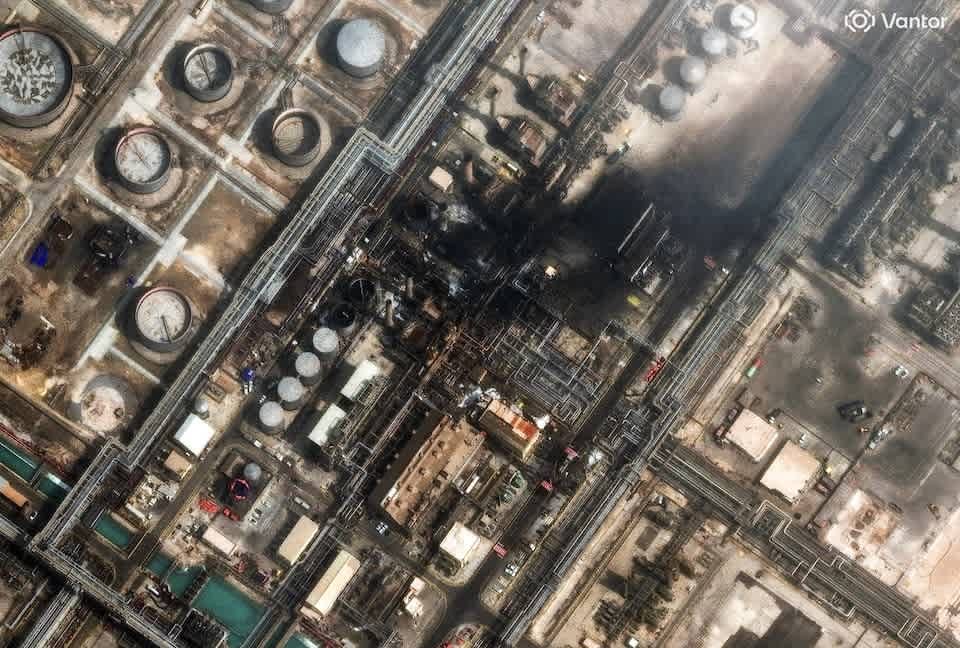
HIGH-CONFIDENCE — The coercion architecture Trump deployed on June 9 has a hard expiration embedded in its own mechanics. A public declaration that the United States “must, of necessity, respond” is a commitment statement. Unlike the late March “Clock is Ticking” ultimatum — which was issued without a date and absorbed without consequence — the June 9 language was declarative and attributive. Trump named Iran. He named the Apache. The commitment is on the record. Washington’s decision window is not open-ended; it is defined by the speed at which domestic political pressure compounds, the Netanyahu variable activates, and Iran’s assessment of US resolve crystallizes into a posture it cannot quietly walk back from.
Eight indicators are now on the board simultaneously. The most consequential is CENTCOM’s formal investigation statement — not because it changes what happened, but because it closes the gray-zone ambiguity that makes the current dual-signal viable. If CENTCOM formally attributes a deliberate shootdown, the “collision” framing collapses and the administration loses its most important political tool: the ability to calibrate the response without publicly confirming the scale of the provocation. The shape of any Trump response is the second critical indicator. A visible strike on IRGC infrastructure calibrated to avoid nuclear sites is the narrow path — it satisfies the “must respond” commitment without triggering a broader resumption of hostilities. A rhetoric-only response with no kinetic component tells Tehran that the Apache can be absorbed without consequence. That is a permission structure. HIGH-CONFIDENCE — Iran has already concluded that US leverage is near-zero. A non-response confirms it publicly.
The Netanyahu variable is the least controllable node. JD Vance’s June 9 confirmation that the United States and Israel hold “a different view” on the deal did not close the US-Israel gap — it formalized it. Netanyahu’s coalition is under pressure from Ben Gvir, whose political survival depends on continued conflict. The Apache going down in the same 14-hour window as Iran’s missile salvo gives Netanyahu both the domestic justification and the international cover to re-enter without US coordination — and the precedent was already set on June 8, when Israel struck without notice. On Iran’s side, a Round 6 nuclear talks announcement would be the clearest signal that Tehran is protecting the MOU track and treating the Apache as deployed leverage rather than provocation. A formal IRGC claim — any statement attributing the Apache to deliberate action — would collapse the deal track’s plausible deniability architecture and signal that hardline ascendancy has overridden Araghchi’s track. DEVELOPING — no formal Iranian claim has been made as of the evening of June 9. Araghchi’s silence is the single strongest evidence that the deal track is still alive. CONFIRMED — the Task Force 59 (a US Navy task force specializing in unmanned maritime systems) unmanned surface vessel (USV) rescue was the first combat application of unmanned surface rescue doctrine in US military history. It will be treated as a footnote. It introduces a variable into the IRGC’s Hormuz targeting model that did not exist before June 8.
Questions
Of all the watch indicators on the board right now, which single signal tells you definitively whether the architecture holds or breaks — not which side wins, but whether the coercion framework itself survives the next 72 hours?
You’ve identified CENTCOM’s formal investigation statement as the most consequential indicator — the one that closes the gray zone. But CENTCOM has strong institutional incentives to delay or soften that finding. How long can Washington realistically hold the ambiguity open before it stops being a tool and starts being a liability?
This is one of those questions I just can’t comfortably answer because it’s really anyone’s guess. The United States leadership is currently extremely volatile — they do not traditionally make rational decisions, and they’re under pressure from Israel, who has substantial leverage over them in some capacity. If the United States decides to strike — and there is a data cutoff here, so they could have already done so as I’m answering this question — that’s a more likely outcome, but the retaliation from Iran will be much wider in scale. Particularly towards the UAE. I would think they’d hit the UAE pretty hard. The framework is pretty much already broken — it’s held together by glue and tape.
That really is the problem, isn’t it? I don’t know how long that’s going to go, but I think it gets harder every time. In the world we’re in — where people like me are looking the way we’re looking, where satellites circle the globe every two days — not a single thing can truly be hidden from public eye. We have to expect that we are entering that stage of liability. This incident in particular stresses that ambiguity to a point at which it has not been stressed before. Maybe we need to consider that as one of the tipping points.

BOTTOM LINE
Closing Questions
The brief opened with three events in fourteen hours and a single claim: this is one message, delivered in three languages simultaneously. After walking through all five sections — the mechanism question, the dual-track doctrine, the Trump coercion architecture, and the 72-hour decision window — do you hold that verdict, and what does it mean for what comes next?
If a reader takes one thing from this brief into the next week of news coverage — one frame for filtering what they see — what is it?
It’s always really, really hard to say exactly when something’s going to happen, because everything is basically a tipping point. We can’t really gauge when a tipping point is going to happen until it happens. We can look at the conditions and surrounding circumstances and use those to predict whether or not something will happen — but what we’re experiencing in 2026 is really just a series of tipping points as we go very aggressively in a direction that the world was not ready to handle, particularly with the amount of power the United States holds.
There are two very, very different pictures going on. Official statements and ceasefires and discussions regarding peace talks have all become effectively meaningless. The best way to understand what’s going on is to be looking at what’s going on — verifiably — because the synthesis you’re getting from traditional sources is honestly pretty appalling right now. Frame everything through our belligerent source rule: if the party has skin in the game, take what they say with a really big grain of salt.
Sources: CENTCOM official statements (June 4–9, 2026), CBS News, CNN, Reuters, ISW/CTP Iran campaign tracking (criticalthreats.org), Insurance Journal, Euronews, CSIS, Crisis Group Iran Trigger List, @Osinttechnical, NYT, Barron’s, Yahoo Finance, Reddit/OSINT (March 23 timing flag — DEVELOPING) — Note: IRGC/Iranian state sources where cited are a party in the described conflict
— I will continue to keep you updated.
Leave your questions in the comments, and please share your feedback on the Q&A format.
Note: I am committed to providing you with the best available information regarding the wider world. This work is hard, exhausting, and it does not pay.
Any support you can provide is now more important than ever. Thank you.
Find the Firebrand Project on other platforms, make donations, and support my work by visiting my link tree below.


For years, the dispute between Iran, Israel, and the United States was not managed through war but through diplomacy. The Joint Comprehensive Plan of Action (JCPOA) was created to address concerns over Iran's nuclear program through inspections, monitoring, and negotiated restrictions rather than military confrontation. Whatever one's opinion of the Iranian government, the agreement represented an attempt to resolve one of the world's most dangerous disputes without bombs, missiles, or invasion. At the same time, Iran was remarkably consistent in publicly stating its red lines. Iranian leaders repeatedly warned that attacks on Iranian territory, its sovereignty, or key national interests would provoke a response. Whether one agreed with those warnings or not, they were not hidden. They were stated openly. The central question therefore becomes whether a functioning diplomatic framework was given every opportunity to succeed before the world moved closer to conflict, and whether publicly declared red lines were treated as deterrents to war or as justifications for it.
Yet the most important question is not what was said in presidential offices in Washington, government ministries in Tehran, or security meetings in Israel. The most important question is who paid the price when diplomacy collapsed. It was not the negotiators, the strategists, or the political leaders who carried the greatest burden. It was ordinary Iranian families who endured the consequences of sanctions, economic hardship, insecurity, destruction, injury, and loss. History will continue to debate the merits of agreements, the wisdom of red lines, and the decisions that led to confrontation. But for the people living through the conflict, those debates are often secondary to the reality of daily life. When agreements fail and red lines are crossed, it is rarely the powerful who suffer most. The heaviest cost is almost always borne by ordinary people whose lives are forever shaped by decisions they neither made nor controlled.
I seriously don’t even understand how the term “ceasefire” is being used. Does no one truly know what the word means? Has every person out there forgotten how to use a dictionary? See below:
r/A ceasefire is a temporary agreement between warring parties to stop fighting, suspend aggressive actions, and allow space for peace negotiations or humanitarian aid. Derived from a military command to "cease fire," it acts as a pause in hostilities rather than a permanent end to the war.
Can it be reported, written about, or debated in any legitimate or literate manner that what has transpired met/meets the definition of a “ceasefire”. Considering that both the US and Israel failed spectacularly to pause hostilities or aggressions or allow humanitarian aid for any appreciable time it would seem the word is NOT being used in its true meaning.